


.webp)


Montenegro presents an increasingly attractive environment for managing international business and investment. The country’s economy continues to grow steadily, with an estimated nominal gross domestic product (GDP) of approximately $9.35 billion in 2025, reflecting ongoing expansion and economic resilience.
The Government of Montenegro has initiated legal reforms designed to create favourable conditions for foreign entrepreneurs, investors, and talent, further strengthening the country’s international appeal. Podgorica, the capital city and economic centre of Montenegro, is expanding rapidly and remains open to further development and foreign investment.
Montenegro also offers a highly favourable tax system and a safe, transparent, and straightforward procedure for foreigners to purchase property. There are abundant opportunities for investment across key sectors, including real estate, tourism, agriculture, energy, and transport, making Montenegro an appealing destination not only for traditional investors but also for international professionals and digital nomads seeking a business-friendly environment and high quality of life.
Real Estate & Construction Business in Montenegro
The real estate and construction business in Montenegro represents one of the fastest-growing and most important economic sectors in the country. This growth is primarily driven by the continuous development of tourism and Montenegro’s strong appeal to foreign investors since gaining independence in 2006. Over the years, Montenegro has become a highly attractive destination for living, working, and investing, with a steadily increasing number of foreigners choosing to stay seasonally or reside permanently.
The rapid tourism development in Montenegro has a direct impact on the expansion of construction projects nationwide. Increased demand has led to the development of modern marinas for boats and yachts, luxury touristic resorts, high-end hotels, as well as residential projects such as apartment buildings, private houses, and villas. The construction of these types of projects has significantly intensified, reshaping both coastal and inland regions. Consequently, all professions connected to construction and real estate—including architecture studios, construction companies, real estate developers, and real estate agencies—are experiencing strong and sustainable business growth.
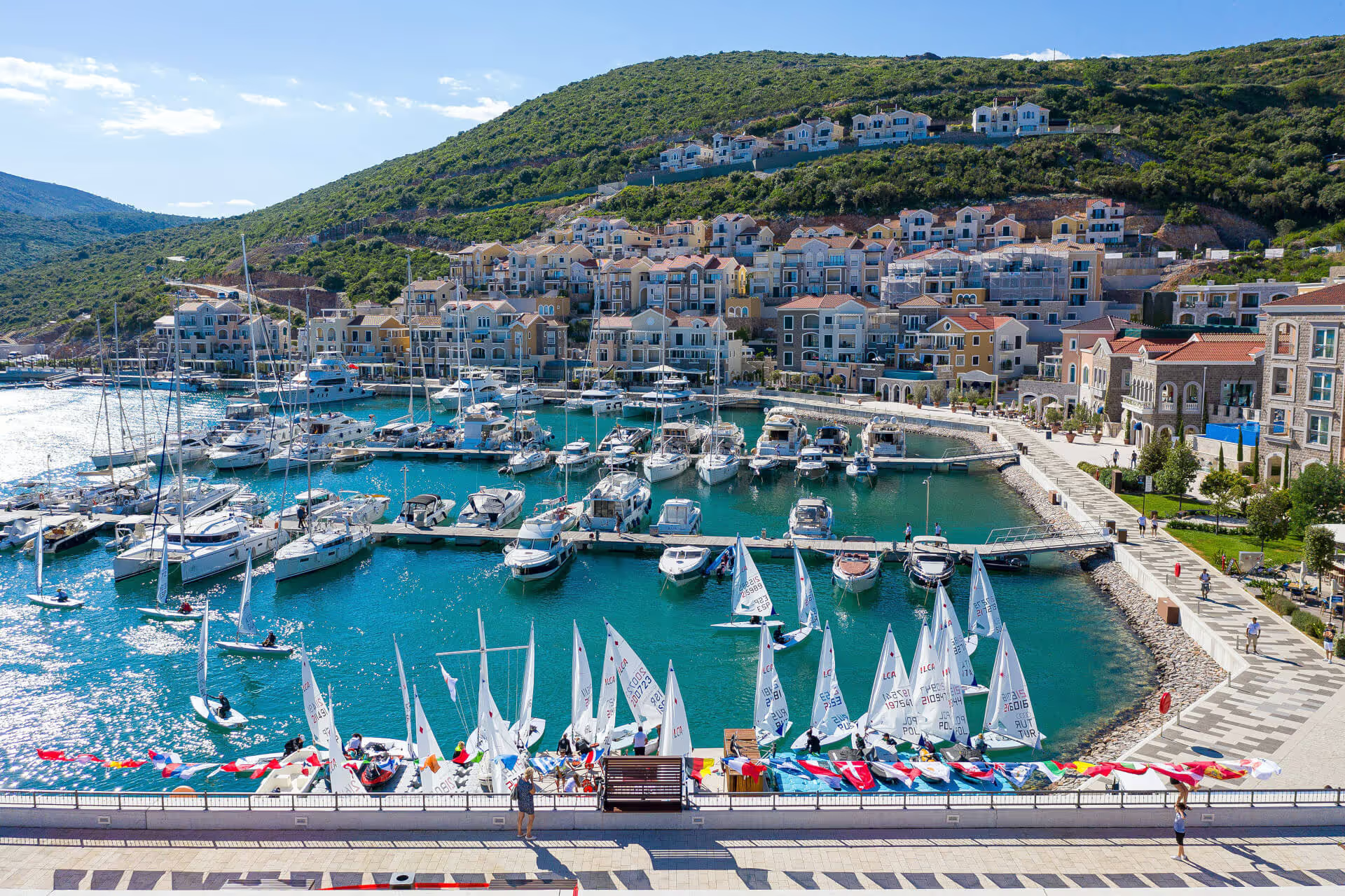
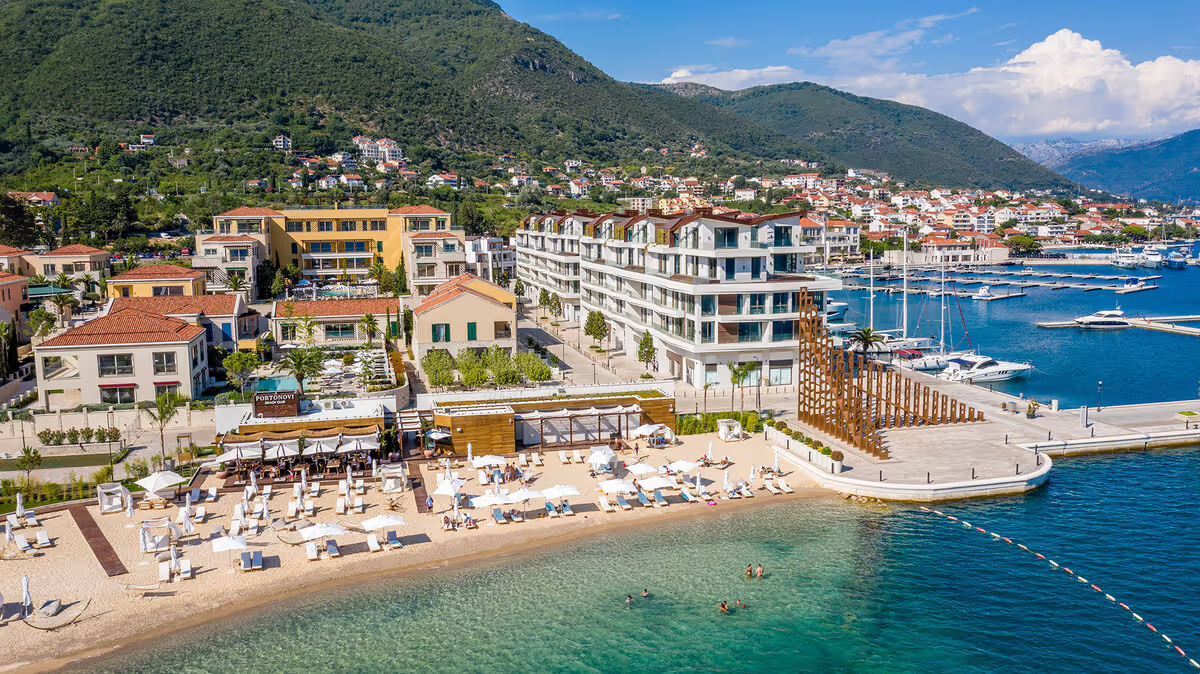
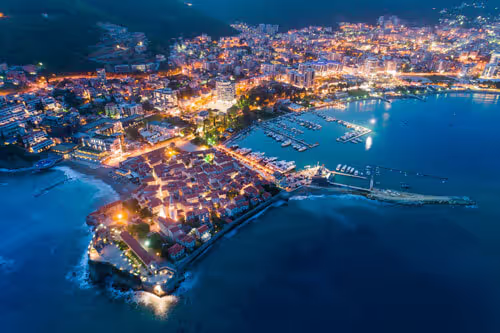
The majority of major real estate projects in Montenegro are located along the coast. Some of the most prominent developments include luxury marina and touristic resort projects such as Porto Montenegro, Luštica Bay, and Portonovi in the Bay of Kotor. Budva, recognised as the tourism capital of Montenegro, has undergone extensive expansion, with the construction of numerous hotels, condo-hotels, and modern residential buildings. These include beachfront properties and luxury seaside apartments, many of which are ideal as touristic apartments for investment and properties with rental income potential.
In addition to coastal development, Podgorica real estate is experiencing steady growth, driven by population increase and rising demand for residential and commercial properties.
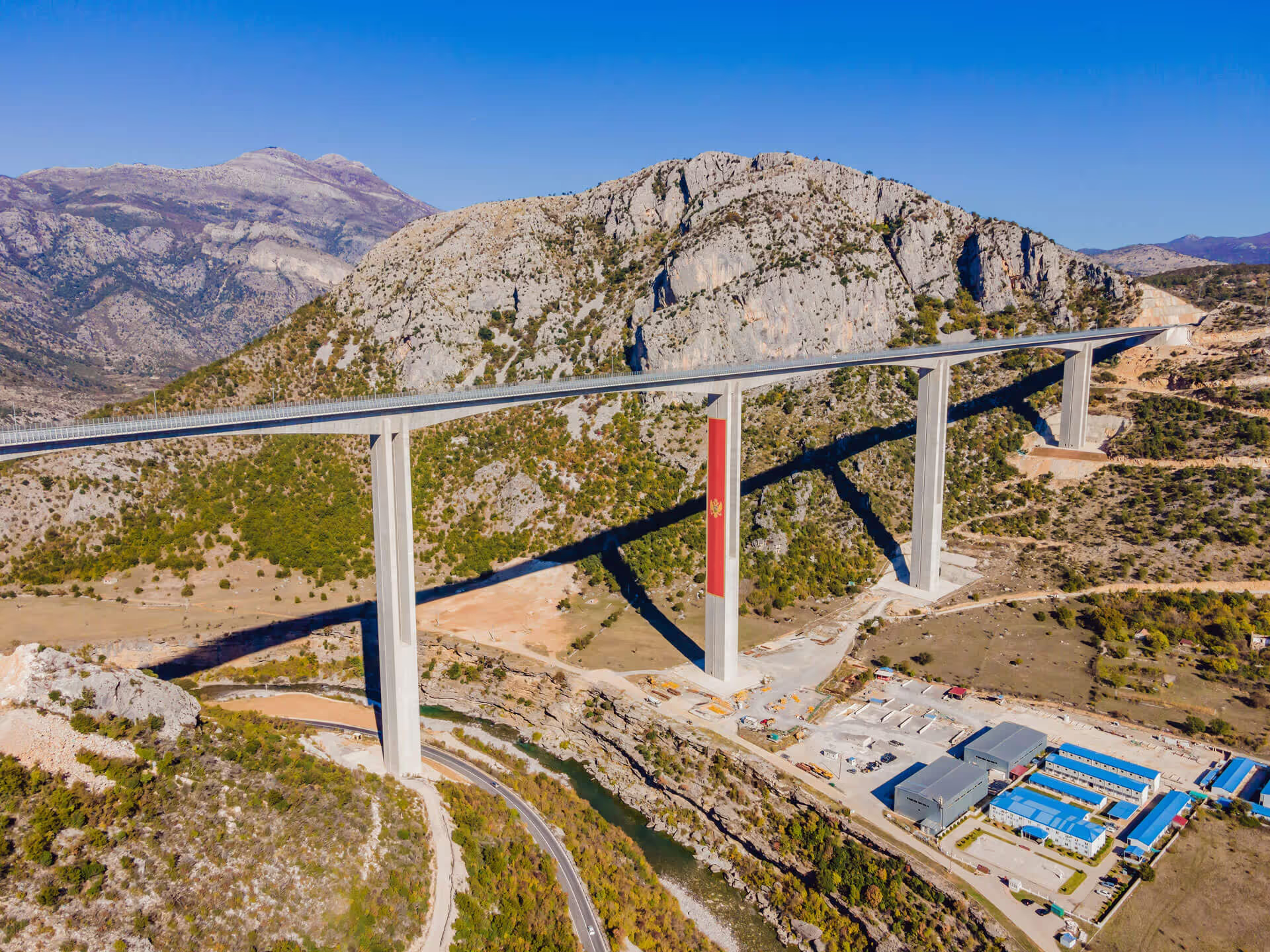
Northern Montenegro is also gaining importance, with Kolašin real estate emerging as a key investment destination. The opening of the “Princess Ksenija” highway connecting Kolašin to Podgorica has accelerated development, further supported by the expansion of a modern ski resort ranked among the best in the region. As a result, construction of high-class hotels and touristic resorts is increasing, along with growing interest in buying apartments, land, houses, and villas.
Foreign investors increasingly invest in Montenegro real estate through the purchase of touristic apartments and houses, particularly in prime locations and integrated touristic resorts. These investments provide long-term value appreciation, as property prices continue to grow annually, combined with stable returns through rental income. This dual benefit positions Montenegro as a highly attractive market for real estate investment with rental income and long-term capital growth.
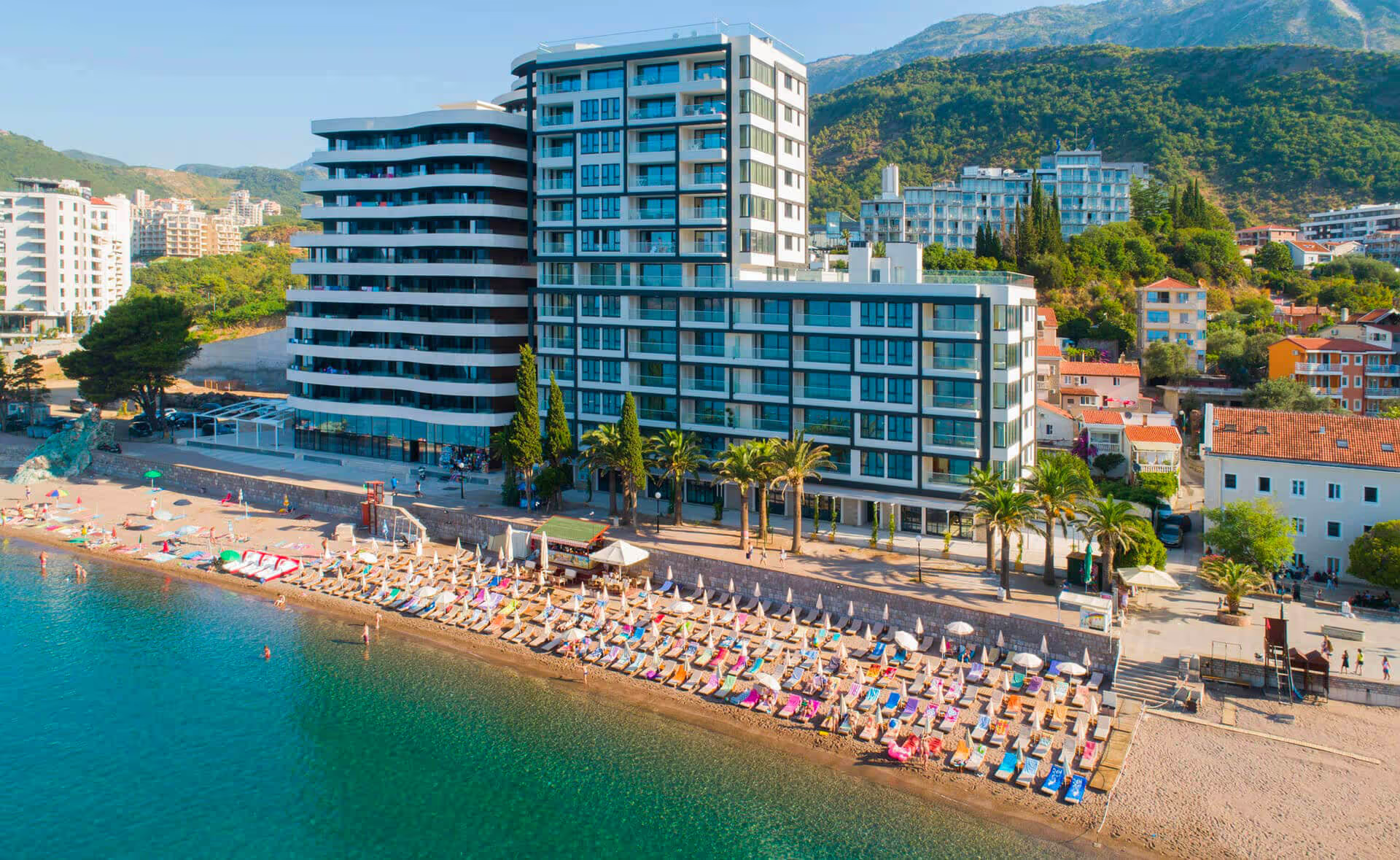
Beachfront Hotel Apartments in Budva Municipality
Tourism
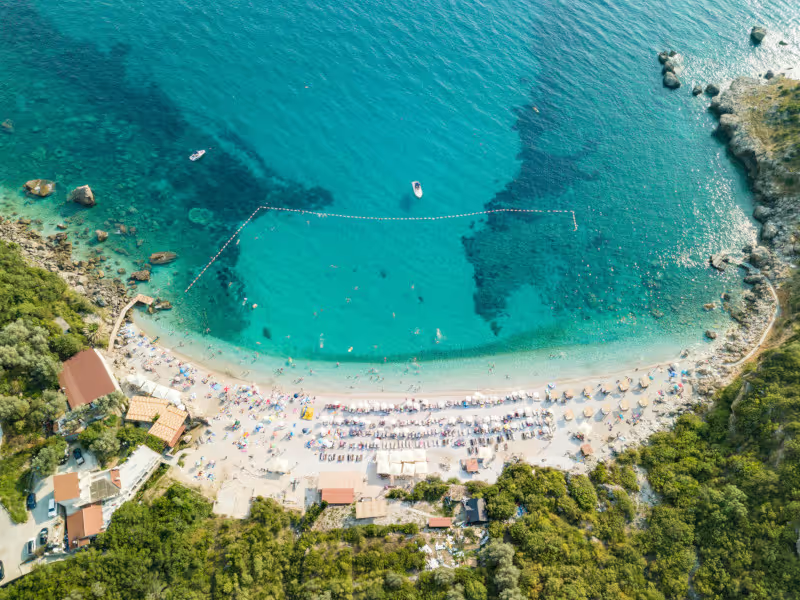
Tourism is the main driver of the social and economic development of Montenegro. It’s share in GDP is continuously increasing due to the growing number of tourists, overnight stays, and income from this sector. The diversity and quality of natural and anthropological values make Montenegro one of the most attractive regions in the Mediterranean. There are three recognisable natural areas: the coast, karst fields and the region of high mountains. Tourists have the opportunity of swimming in the sea or lake, going to river rafting and skiing in the mountains – all in one day. On the 293 km long Montenegrin coast, there are numerous sandy and pebble beaches. Montenegro is not just a summer swimming destination, but also a destination which offers plenty of opportunities to lovers of active holidays during the winter months, as well as cultural events and festivals throughout the year. In the total area of Montenegro, nearly 8% is covered by five national parks, which include the most beautiful and most representative ecosystems and natural habitats.
In recent years, tourism is recording growth, which was followed by the implementation of several new infrastructure projects, as evidenced by the business of some of the world’s leading hotel brands such as Hilton, Regent, Chedi, Melia, Iberostar, Swissotel, Crowne Plaza, Merit and the first One & Only resort in Europe, while building of Ritz Carlton, Marriott International and Radisson are announced.
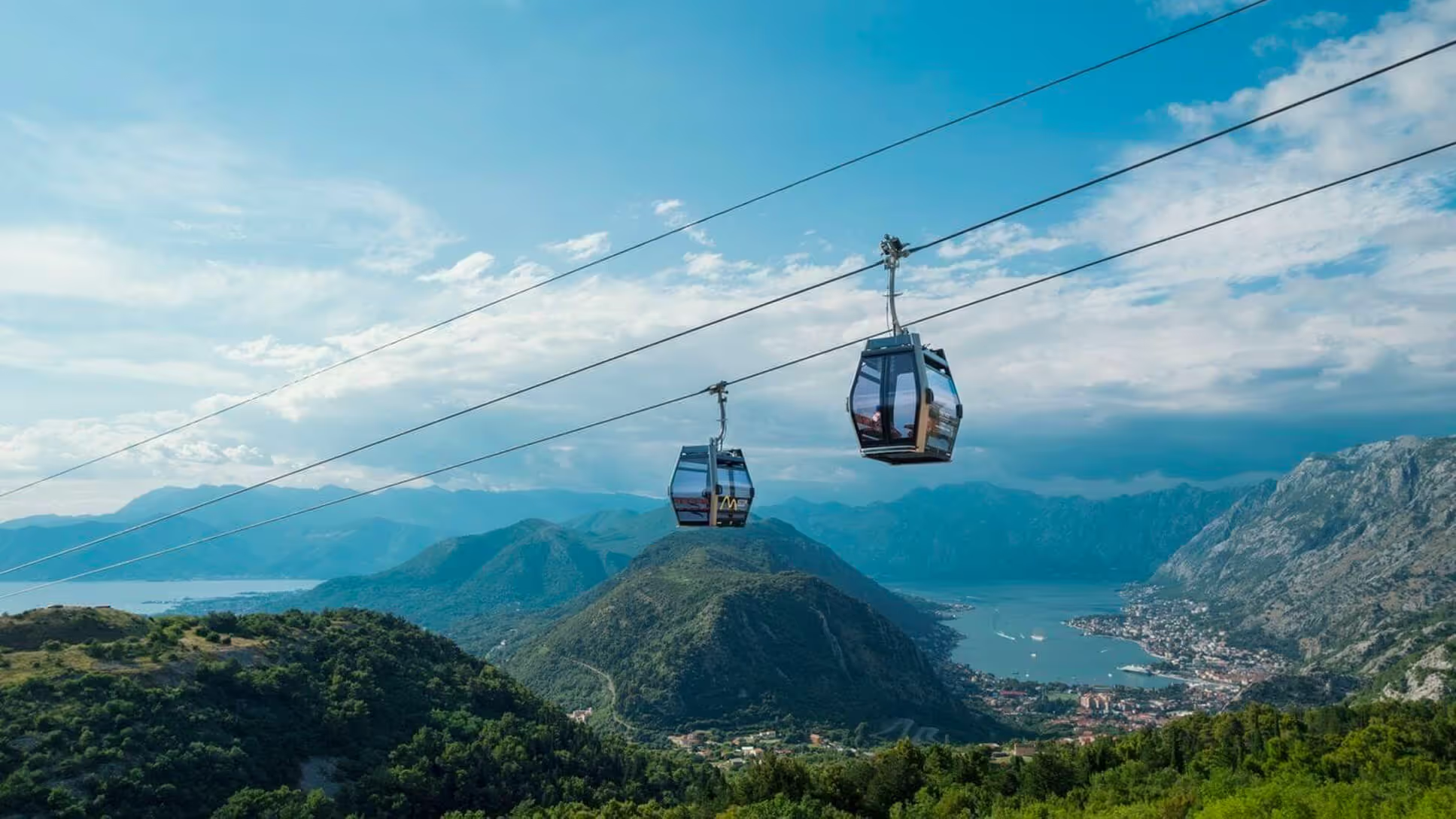
Cable Car above Kotor Bay - Tourist attraction of Montenegro
Energetics
Energy and renewable energy sources are developing significantly in Montenegro and represent a pillar of the sustainable development. The energy sector of Montenegro has been developing in accordance with the EU energy system and is open for private, domestic, and foreign investments.
The largest project in the field of energy is the installation of a new electrical and energy interconnection system through the Adriatic Sea between Montenegro and Italy. This project implemented through the partnership of the international company Terna with companies from Montenegro, includes a marine cable with a capacity of 1000 MW and the accompanying infrastructure network. This way, Montenegro will become an exporter of electricity, via Italy to the rest of Central Europe.
In Montenegro, there is a thermal power plant, several hydro power plants on the rivers as well as wind power plants. Montenegro is extremely rich in natural resources such as mountain rivers and fertile valleys, and the plan is to use these resources for the economic development. Diverse ways of obtaining energy from renewable sources are being developed. Due to the extremely favourable climate and the large number of sunny days (240 days a year), Montenegro has more active and developing projects regarding solar energy resources.
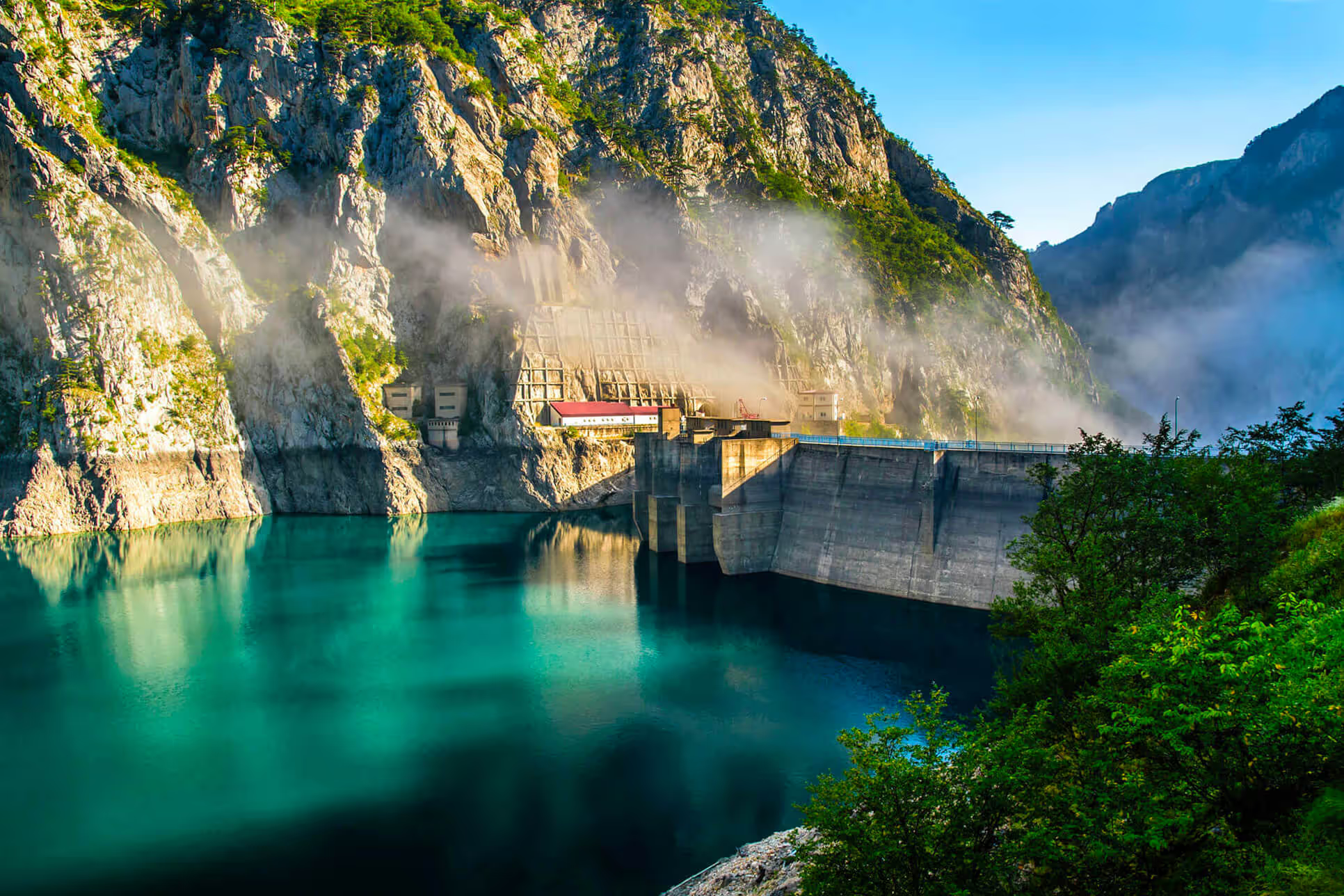
Energy production with water resources
Agriculture & Food Production
Agriculture is one of the main development fields of economy which is accelerated through subsides of Montenegrin Government. The development plan of Montenegro is focused on maximising production of food to cover domestic consumption and needs for tourism.
Montenegro has all the facilities to produce different types of food. Natural amenities include the Adriatic Sea, Skadarsko Lake, numerous mountain rivers and sources of drinking water, the Mediterranean climate, the Zeta and Bjełopavlići plains, mountains. On the mountains in the hinterland of the Adriatic coast, where Mediterranean climate crosses with continental, ideal conditions are created to produce high-quality products.
Montenegrin products that stand out are olive oil, wine, spring mineral water, honey, beer, fish and seafood, fruits and vegetables, dried meat products, dairy products etc. Montenegro has great potential for growth and development of the food industry. The share of agricultural products in foreign trade exchange has been growing because of increased production and exports, as well as the growth of imports, to meet the growing demand in the tourism sector.
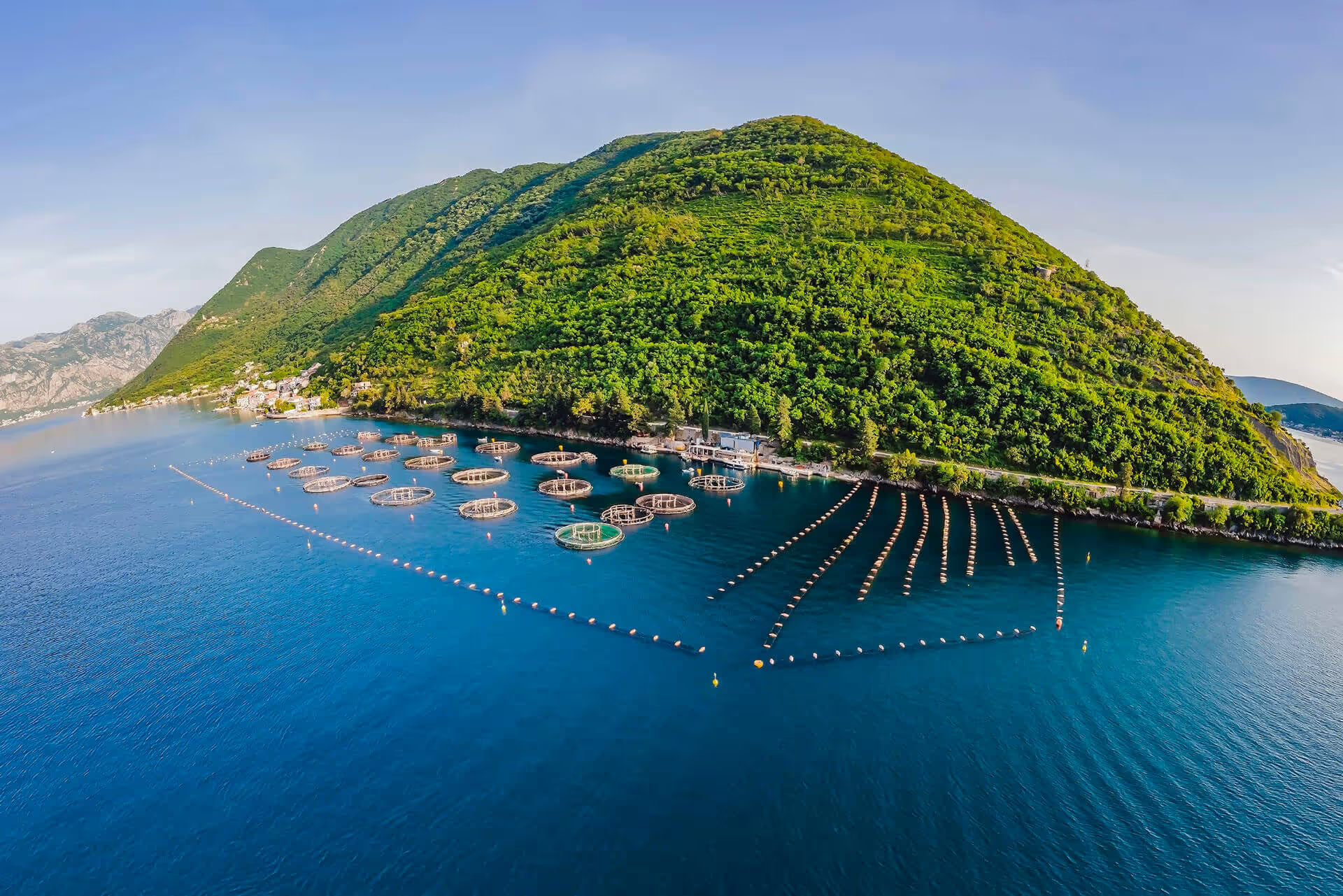
Shell cultivation in the Bay of Kotor
Trade & Transport
The most important infrastructural project in Montenegro is the construction of a highway that will connect the commercial port of Bar on the south of Montenegro and the entire country to the European network of corridors. Strategically, this is of great importance for the development of tourism, business, and trade in Montenegro. The first section of the highway which connects Podgorica to Kolašin was opened on July 13, 2022.
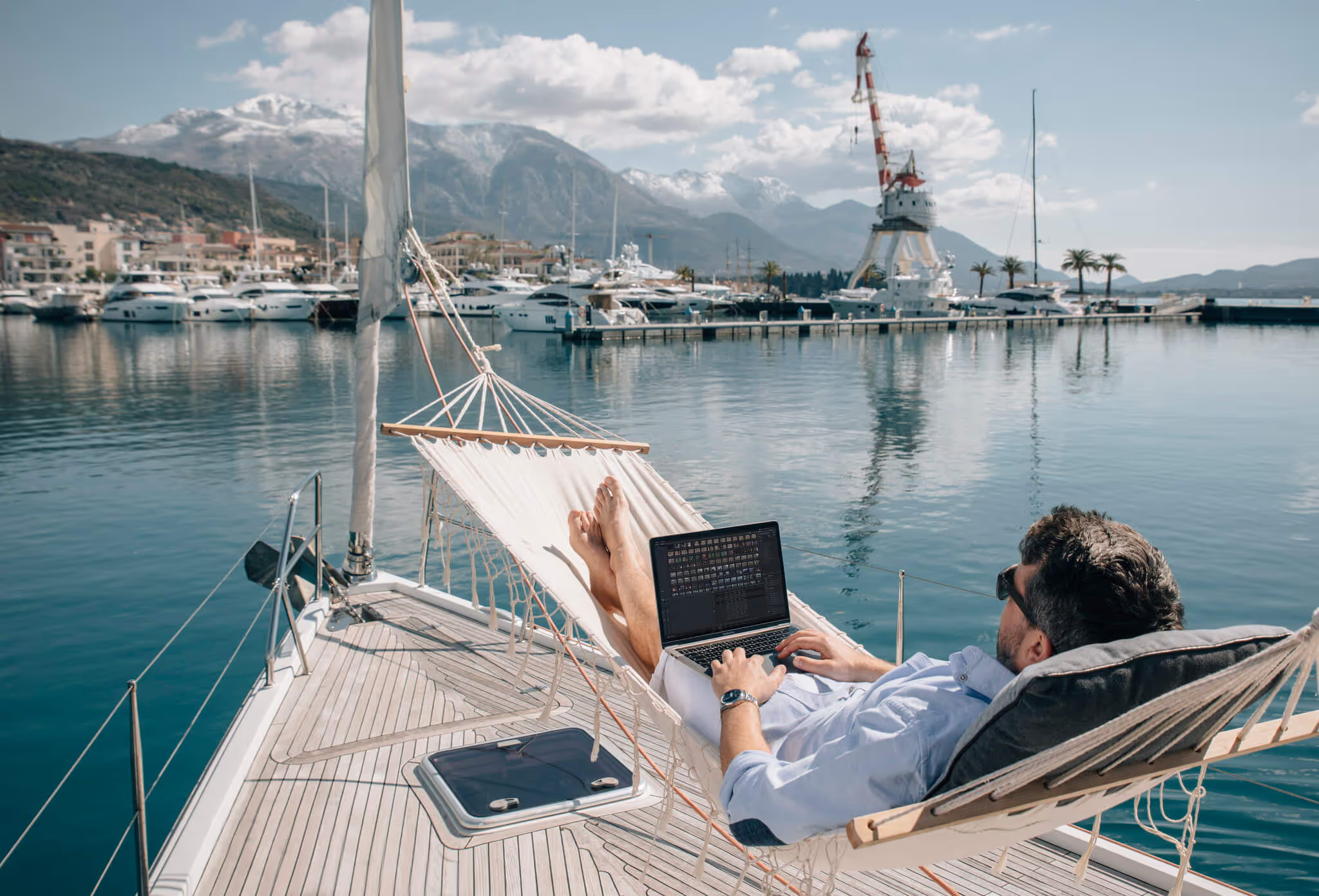
Montenegro has two international airports, Tivat and Podgorica, international commercial seaport of Bar, the tourist cruising port of Kotor and several marinas for mega yachts, Porto Montenegro, Porto Novi, Luštica Bay, Marina Budva, etc.
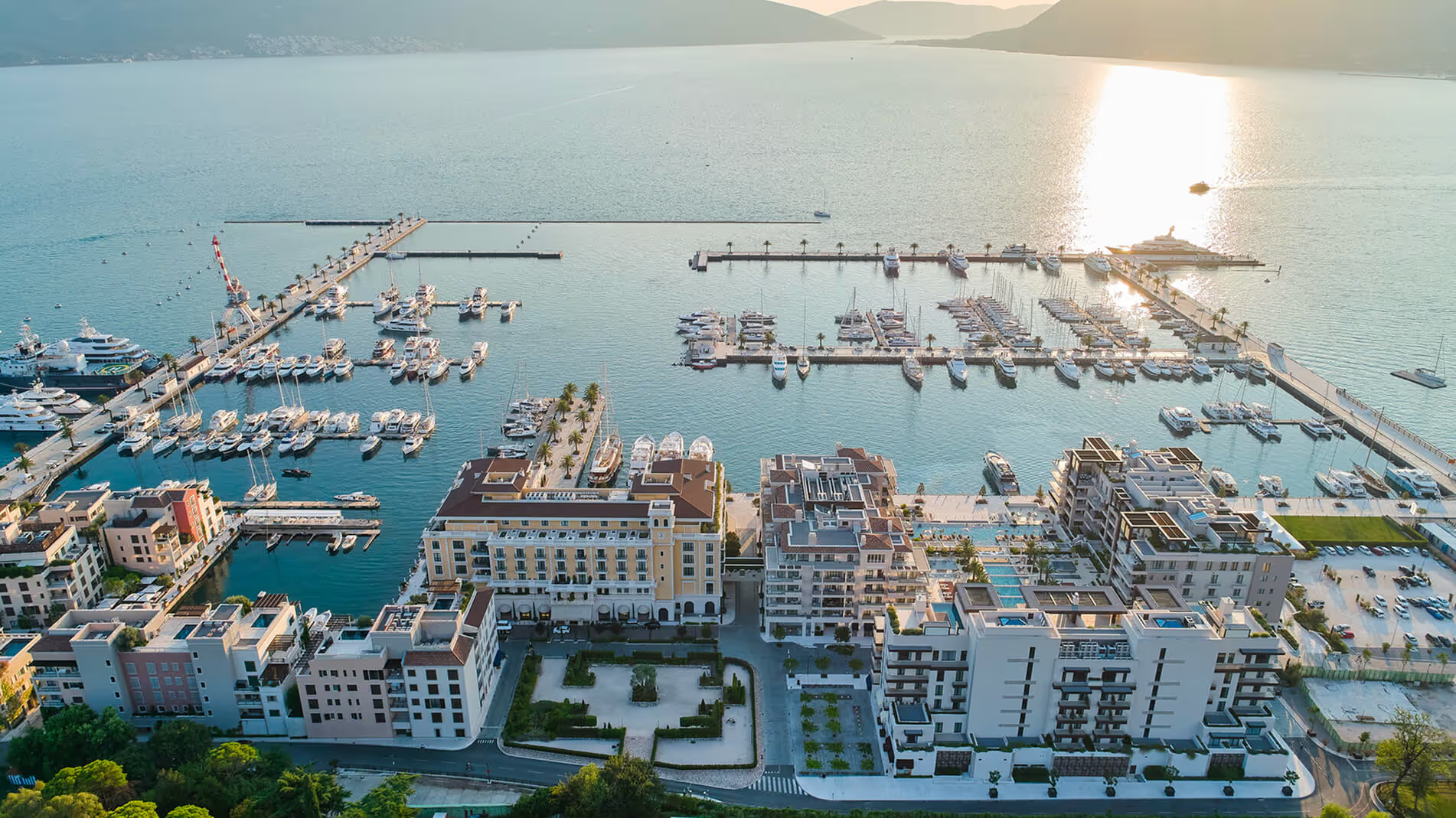
Porto Montenegro - biggest super yacht marina in the Adriatic
Conclusion
Montenegro offers diverse and attractive investment opportunities across key sectors driving long-term economic growth. Real estate and tourism remain the most profitable options, supported by a growing market, high ROI potential, and equal property ownership rights for foreign investors. Additional opportunities in food production, renewable energy, and the film industry further strengthen Montenegro’s position as a stable, sustainable, and investment-friendly destination with strong future potential.



Get in touch with us today


Hotel Bracera
81310 Budva
Montenegro


